

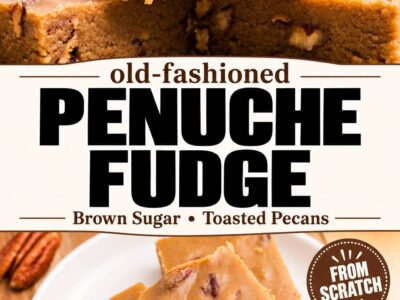
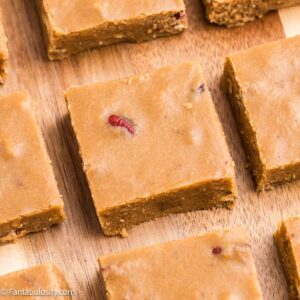
Penuche fudge is a brown sugar fudge with a buttery, caramel-like flavor and a tender bite. This old-fashioned version is made with heavy cream and toasted pecans, then cooked, cooled, and beaten to give it that creamy, slightly crumbly texture.
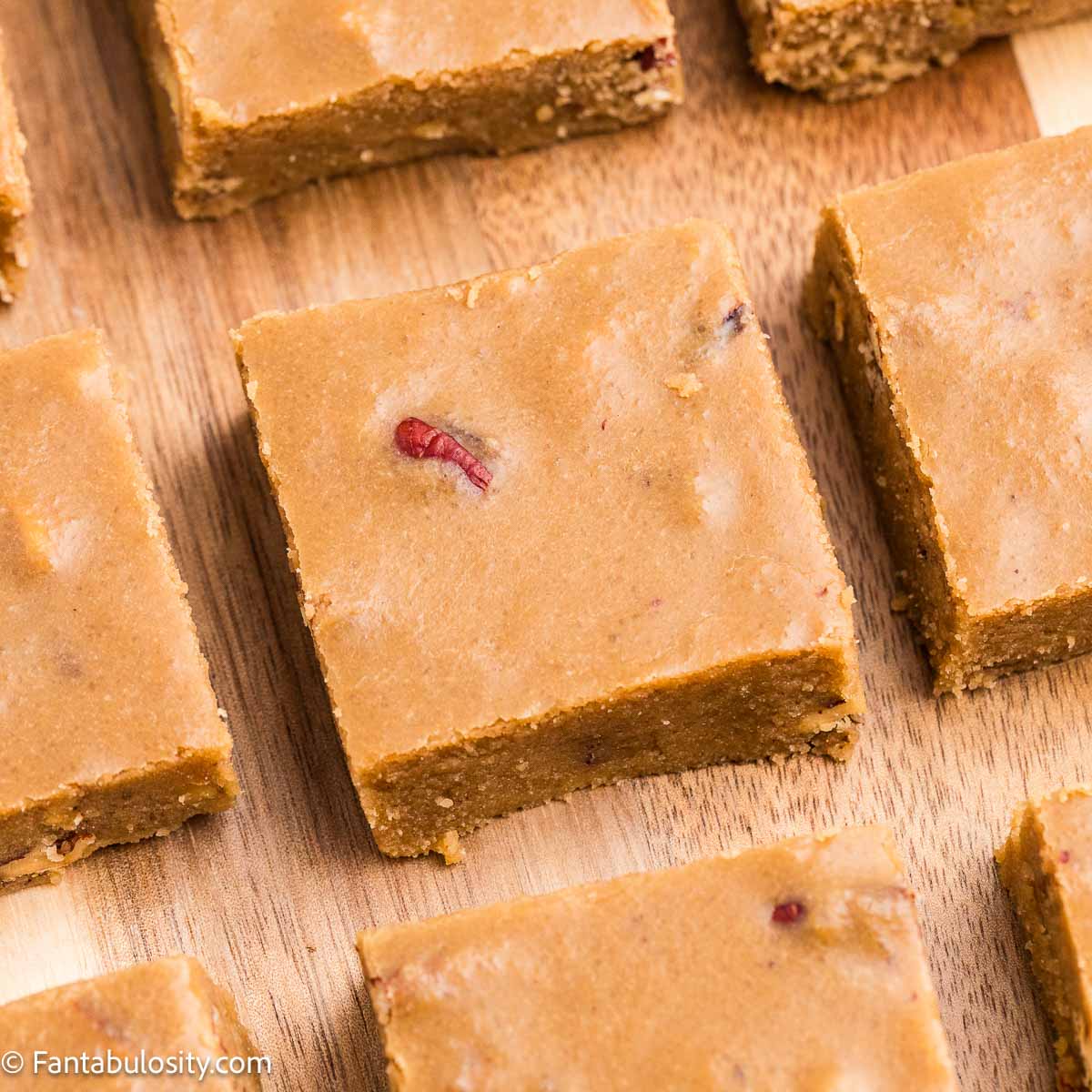
The ingredient list is short, but this is a recipe to give a little time. A candy thermometer takes the guesswork out of cooking the sugar mixture, and the cooling time matters just as much as the time on the stove. Plan ahead so the fudge has several hours, or overnight, to firm up before you cut it.
Cut the batch into small squares for a Christmas candy tray, tuck a few into a treat box, or keep a container ready for a little something sweet after dinner. For another flavor to add to the tray, try this peanut butter fudge.
What Is Penuche Fudge?
Penuche is a traditional fudge made primarily with brown sugar, butter, and milk or cream. Brown sugar gives it its tan color and caramel-like flavor, with a little molasses flavor in the background.
There's no chocolate in this recipe. The brown sugar is the main flavor, with vanilla to round it out and toasted pecans for crunch. It's rich, so a small piece goes a long way.
Ingredients and Helpful Notes
You'll find the complete ingredient amounts and printable instructions in the recipe card below.
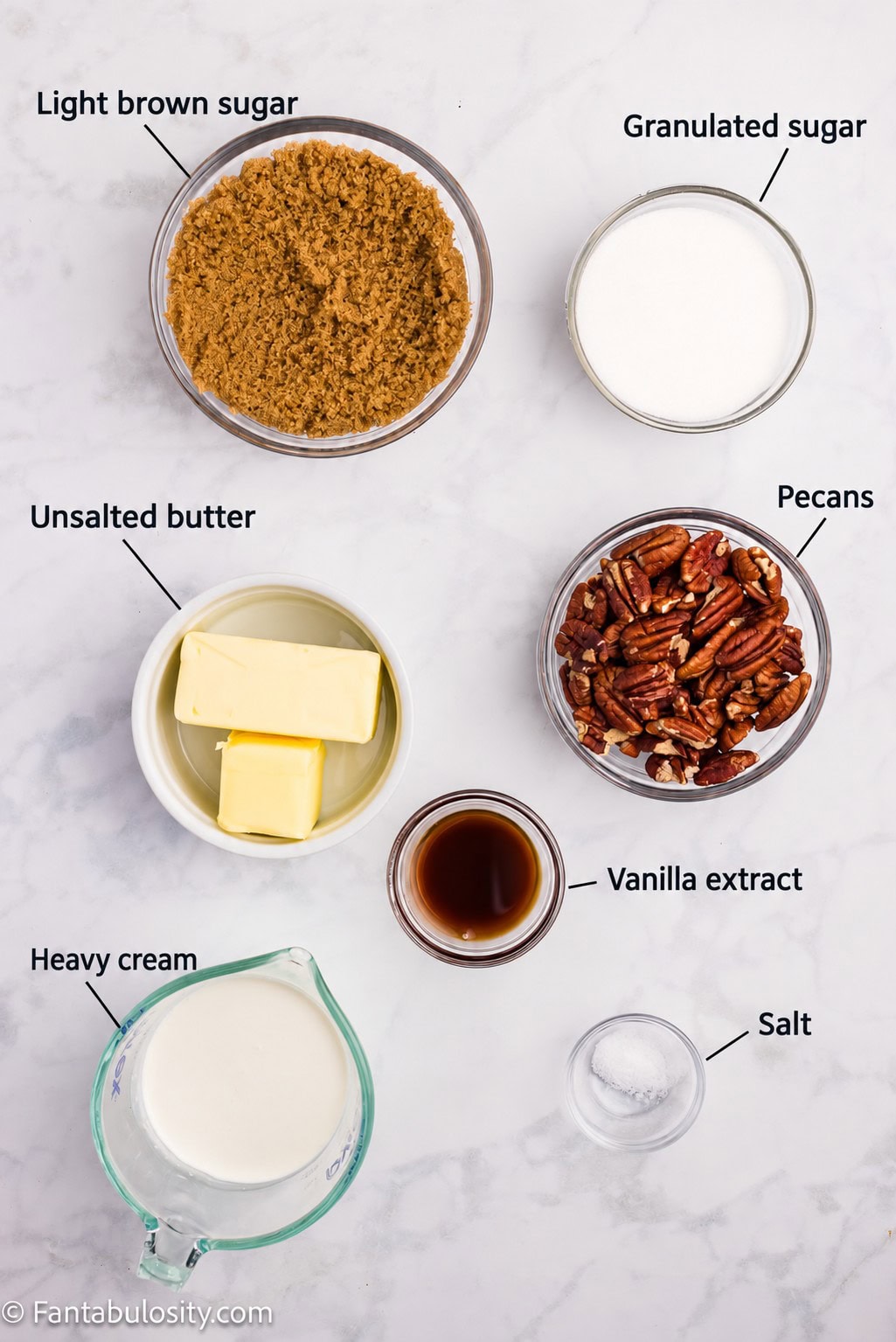
- Light brown sugar: Pack it into the measuring cup, then level the top. Light brown sugar keeps the molasses flavor gentle.
- Granulated sugar: This recipe uses a smaller amount of white sugar along with the brown sugar. Measure both amounts as written.
- Unsalted butter: You'll need ¾ cup, which is 1½ sticks, for the fudge, plus a little extra to grease the parchment.
- Heavy cream: Use liquid heavy cream, also labeled heavy whipping cream. This recipe was developed with cream, so stick with it for the intended texture.
- Salt: A small amount balances the sweetness. Use unsalted butter so you control how much salt goes in.
- Vanilla extract: This goes in after the mixture has cooled to 110°F, just before beating.
- Pecans: Toast, cool, and finely chop them. Small pieces are easier to distribute through the fudge and cut into neat squares.
You'll also need a heavy-bottomed saucepan, a candy thermometer, a heat-safe mixing bowl, and an 8×8-inch pan. For beating, use a wooden spoon or a stand mixer fitted with the paddle attachment.
How to Make Penuche Fudge
1. Cook the brown sugar mixture
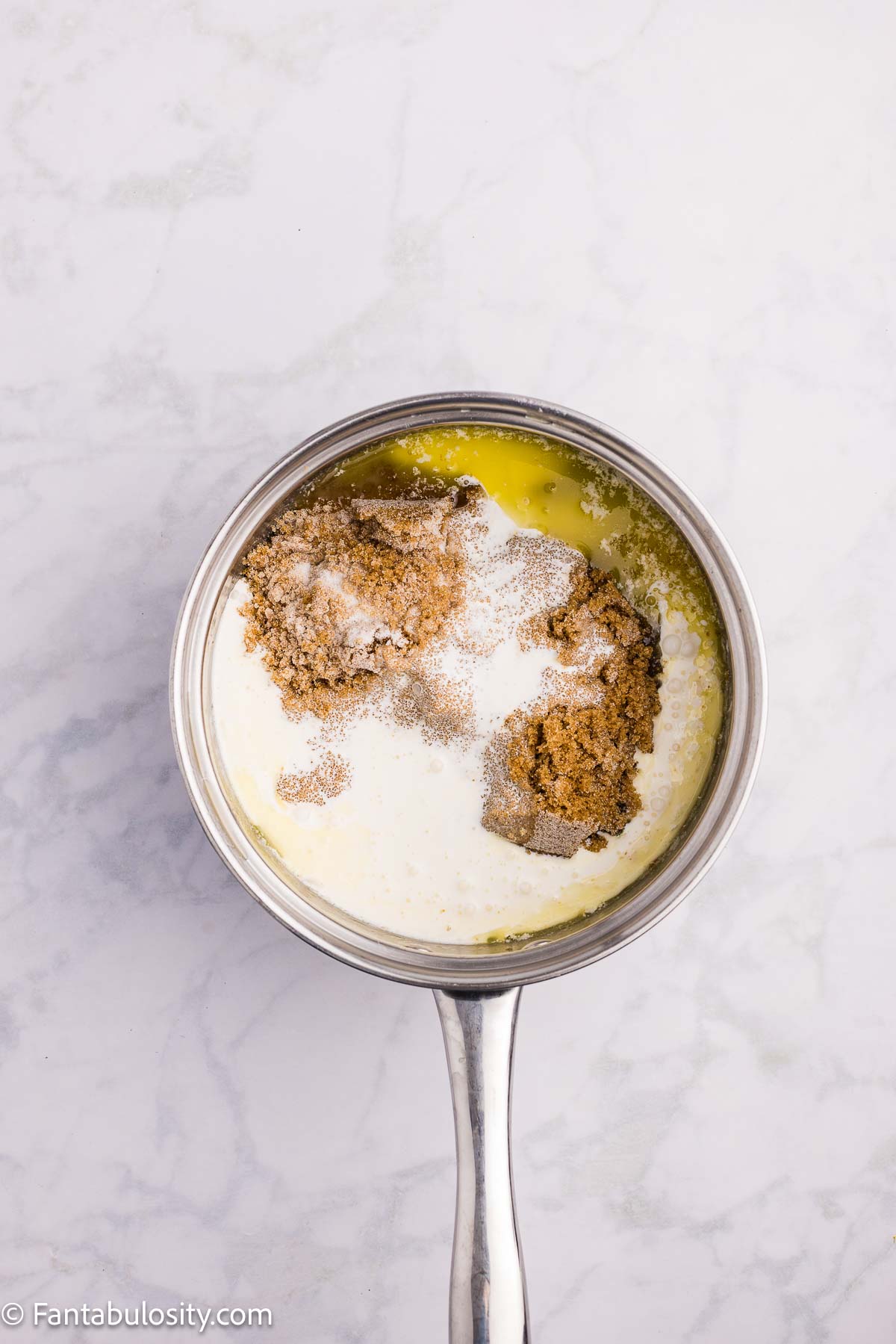
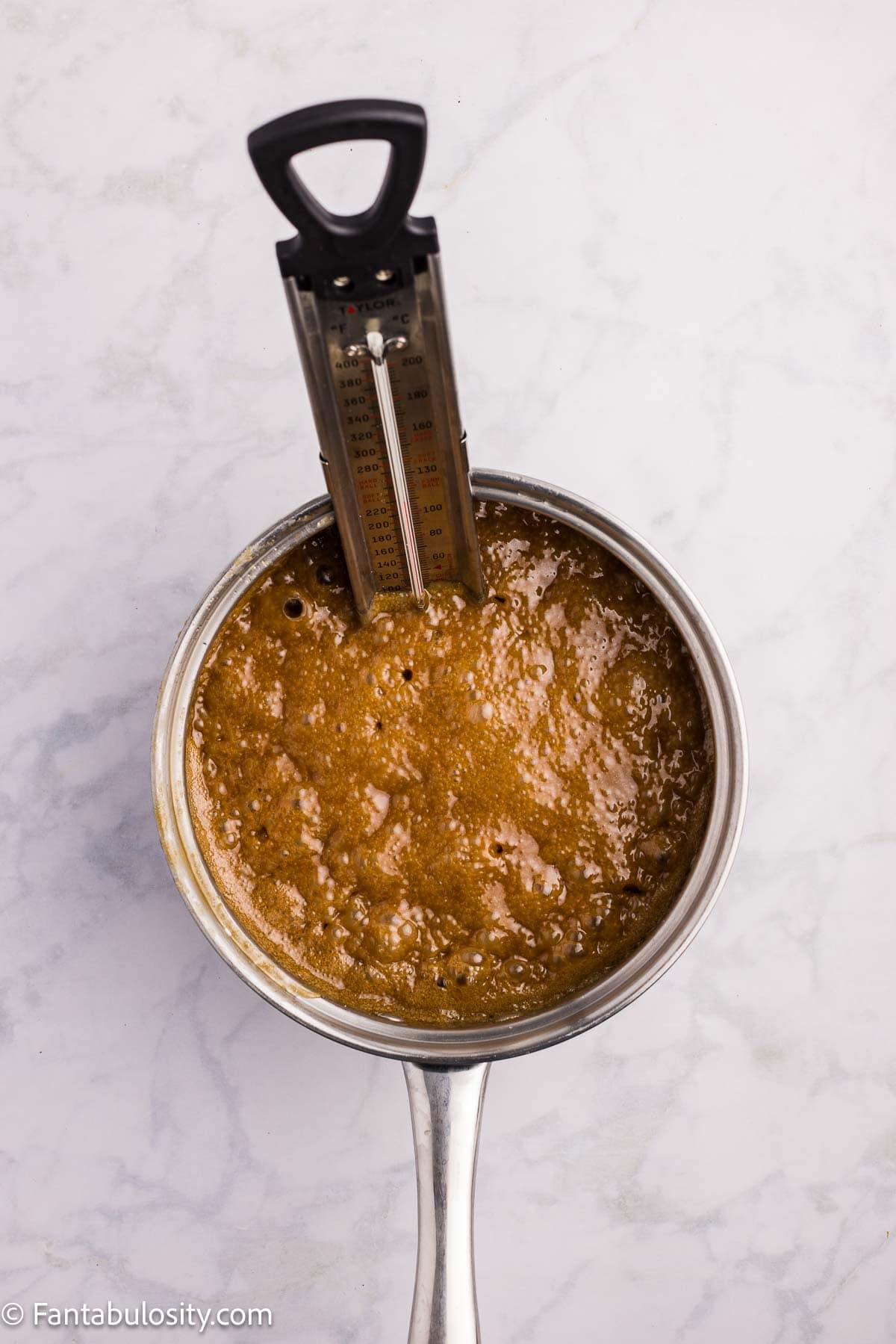
Melt the butter in the saucepan over medium heat. Stir in the brown sugar, granulated sugar, cream, and salt until combined and the mixture begins to boil.
Once it's boiling, stop stirring. Keep it at a steady boil until it reaches 240°F at sea level, with the thermometer's tip in the mixture without touching the bottom of the pan. If you live at a higher elevation, use the adjustment below.
2. Let it cool without stirring
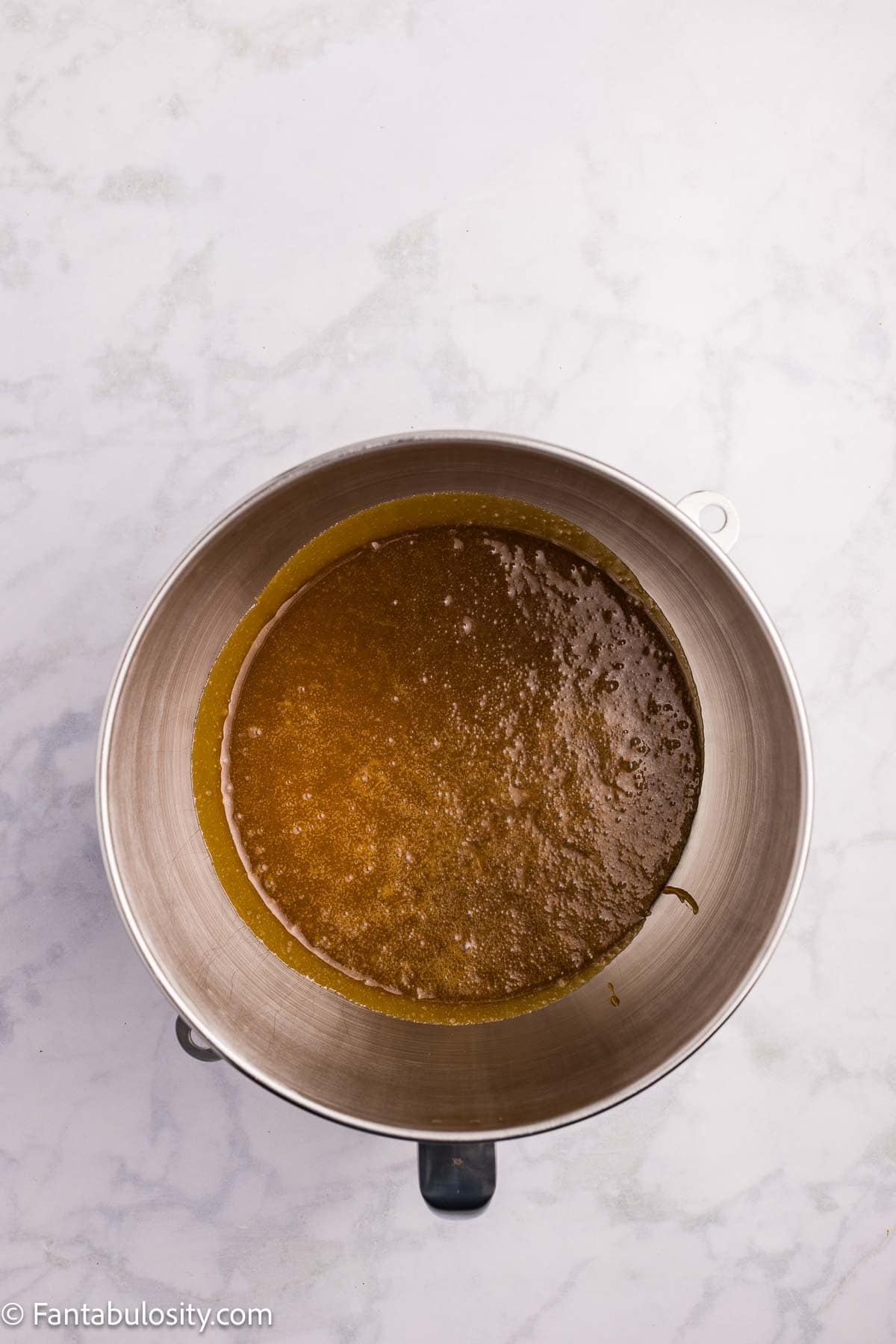
Carefully pour the hot mixture into a heat-safe mixing bowl. Leave it undisturbed until the thermometer reads 110°F. This can take 1-2 hours, depending on your kitchen's temperature.
This is a good time to get the pecans and pan ready. Toast the pecans at 300°F for 5-8 minutes, until fragrant and lightly toasted. Let them cool completely, then finely chop them. Line the pan with two crossing pieces of parchment, leaving overhang, and lightly butter the paper.
3. Beat until the appearance changes
At 110°F, add the vanilla. Beat with a wooden spoon, or use the stand mixer's paddle on low to medium-low speed.
Look for three changes: the fudge becomes thicker, lighter in color, and less glossy. The recipe's timing is about 5-7 minutes with a stand mixer or 8-10 minutes by hand, but use those appearance changes to decide when it's ready.
4. Add the pecans and fill the pan
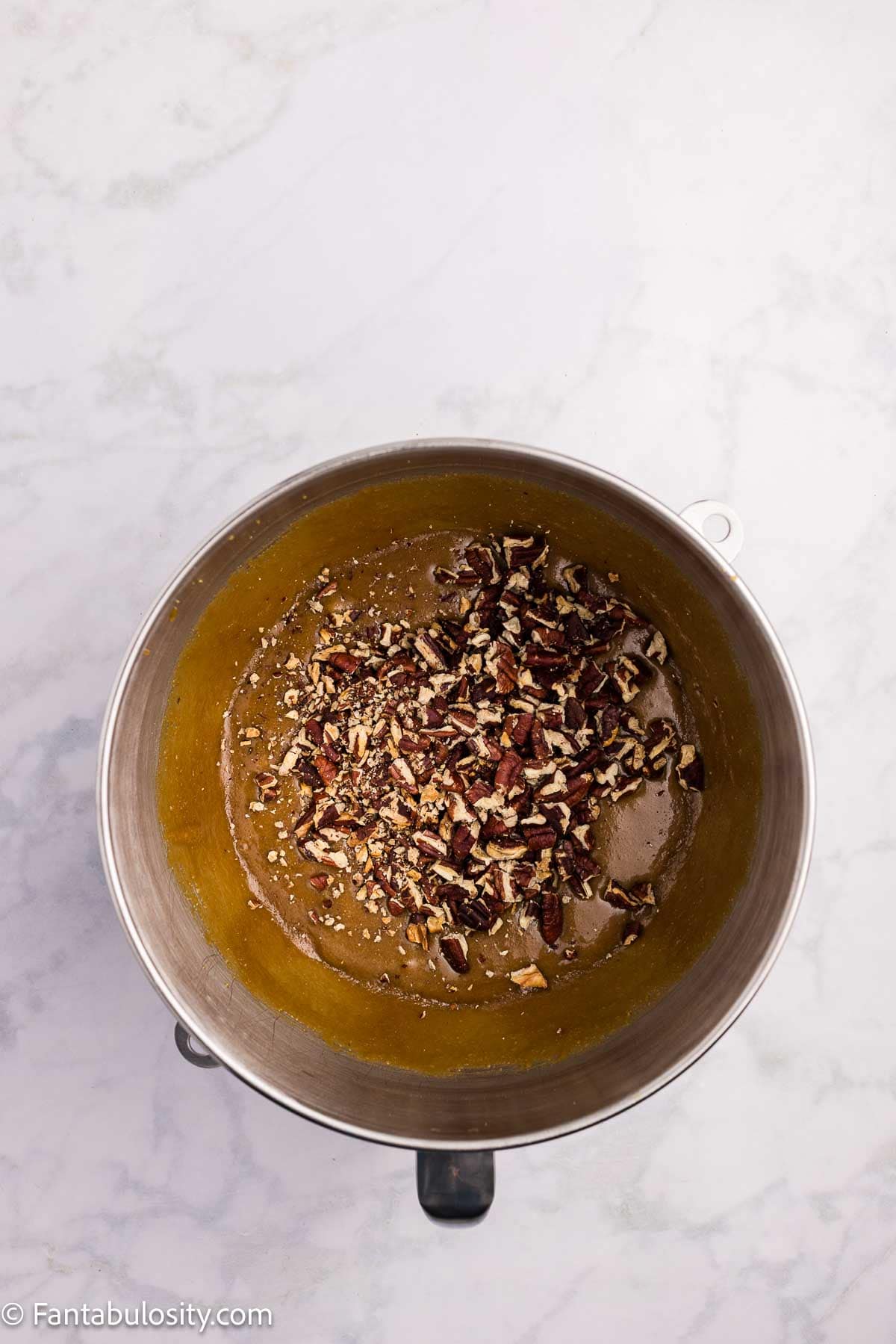
Fold in the toasted pecans and immediately spread the fudge in the prepared pan. Have the pan close by before you start beating-the mixture can begin setting quickly once it thickens.
5. Let it set, then slice
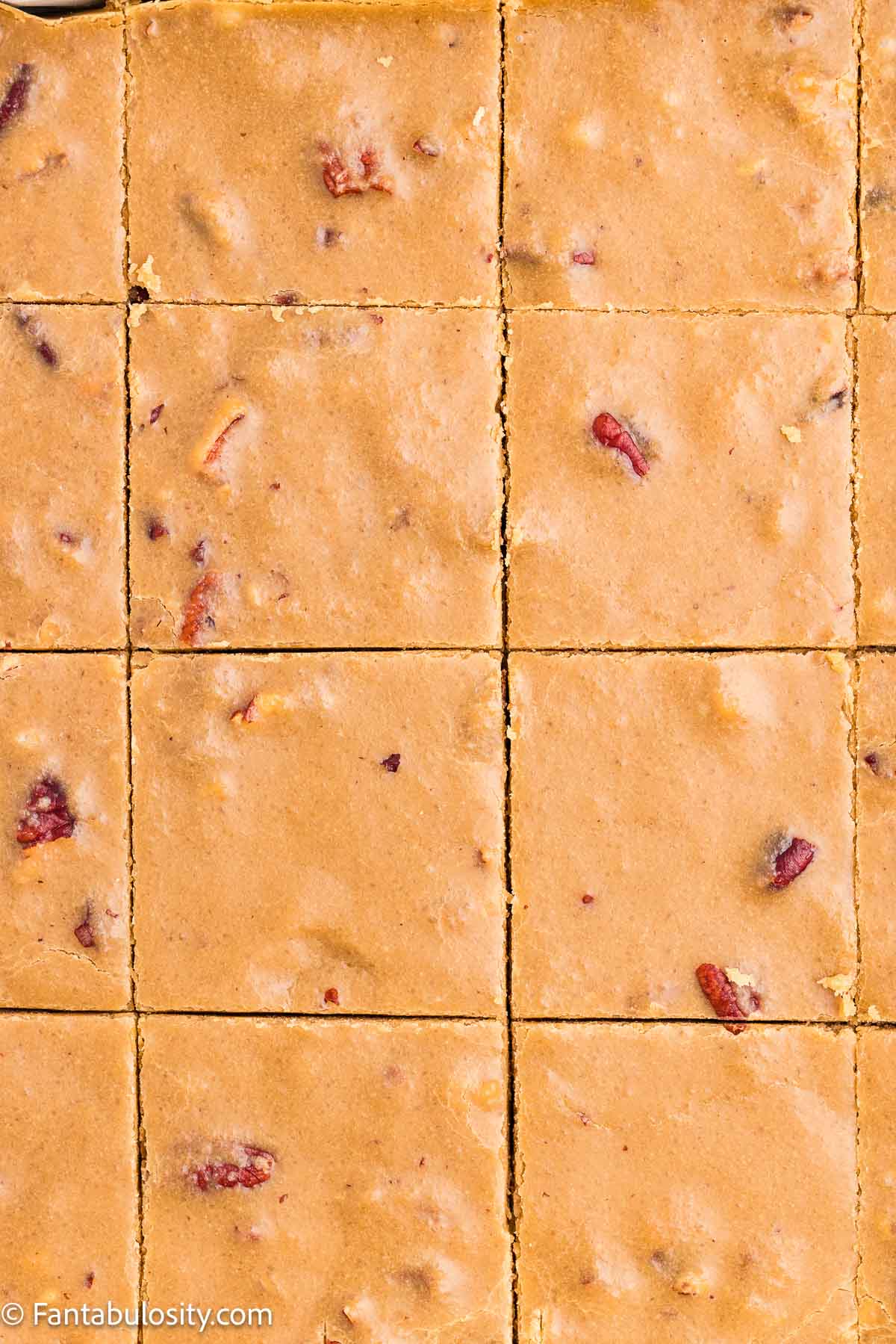
Leave the fudge at room temperature for several hours or overnight, until fully firm. Lift it out using the parchment and cut it with a sharp knife. For 36 small pieces, cut six rows in each direction.
Tips for the Best Texture
- Check the thermometer first. A small temperature difference can change the finished texture. Keep the tip off the bottom of the saucepan so it reads the mixture's temperature.
- Give the cooling stage time. Leave the bowl alone until the mixture reaches 110°F. Stirring or beating too soon can encourage larger sugar crystals and gritty fudge.
- Have everything ready before beating. The pecans should be cool and chopped, and the pan should be lined and buttered.
- Stop when the fudge is ready. Once it thickens, lightens, and loses its shine, fold in the pecans and get it into the pan. Continuing to beat can leave it dry and difficult to spread.
Making fudge at a higher elevation
The 240°F target is for sea level. At higher elevations, the cooking temperature needs to be lower.
Check the temperature your candy thermometer reads in boiling water. Subtract the difference between that reading and 212°F from the recipe's 240°F target. For example, if boiling water reads 202°F, lower the target by 10°F and cook the fudge to 230°F. This follows Utah State University Extension's candy-making guidance.
Recipe FAQs
Coarse, gritty fudge can develop when sugar crystals form too early. Stirring during boiling, disturbing the mixture while it cools, or beating it before it reaches 110°F can contribute. Wait for the cooling temperature before you begin beating; the goal is fine crystals that feel creamy rather than gritty.
Undercooking can leave too much moisture in the mixture. Check your thermometer and make sure the fudge reaches the correct cooking temperature for your elevation. It also needs to be beaten until thick and less glossy, then left in the pan until fully firm before slicing.
Cooking past the target temperature can remove too much moisture. Overbeating after the fudge thickens can also make it dry and crumbly. On the next batch, check the thermometer, adjust for elevation if needed, and transfer the fudge to the pan as soon as it's ready.
Yes, but expect a darker fudge with a stronger molasses flavor. Light brown sugar gives this version its milder brown sugar flavor.
Yes. Making it the day before gives it time to set overnight before you slice and pack it. Follow the storage directions below once the fudge is firm.
How to Store Penuche Fudge
Store the fudge in an airtight container at a cool room temperature for up to 1 week. Place parchment or wax paper between layers so the pieces don't stick together.
For longer storage, refrigerate it in an airtight container for up to 2-3 weeks. Let the pieces come to room temperature before serving for the best texture.
To freeze, wrap the fudge tightly in plastic wrap and place it in a freezer-safe airtight container or bag for up to 3 months. Thaw overnight in the refrigerator, then bring it to room temperature before serving.
More Fudge Recipes
If you're putting together a candy tray, Oreo fudge adds a cookies-and-cream option, and this three-ingredient peanut butter fudge is another simple batch to make ahead.
Recipe
Old-Fashioned Penuche Fudge
Equipment
- Heavy-bottomed saucepan
- Candy thermometer
- Heat-safe mixing bowl
- Wooden spoon or stand mixer with paddle attachment
- baking sheet
- 8×8-inch baking pan
- parchment paper
- Heat-resistant spatula
- Sharp knife
Ingredients
- ¾ cup unsalted butter plus a little extra for greasing the parchment
- 3 cups light brown sugar packed
- ½ cup granulated sugar
- ¾ cup heavy cream
- ¼ teaspoon salt
- 1 teaspoon vanilla extract
- 1 cup pecans finely chopped, toasted and cooled
Instructions
- Cook the mixture. Melt the ¾ cup butter in a heavy-bottomed saucepan over medium heat. Add the brown sugar, granulated sugar, cream, and salt. Stir until combined and the mixture begins to boil. Attach a candy thermometer with its tip in the mixture, away from the pan's bottom. Stop stirring and cook at a steady boil until it reaches 240°F at sea level, or the adjusted temperature in the notes.
- Cool undisturbed. Carefully pour into a heat-safe mixing bowl. Let cool without stirring or beating until it reaches 110°F, about 1-2 hours.
- Prepare the pecans and pan. While the mixture cools, heat the oven to 300°F. Spread the pecans on a baking sheet and toast for 5-8 minutes, until fragrant and lightly toasted. Cool completely and finely chop. Line an 8×8-inch pan with two crossing pieces of parchment, leaving overhang on the sides. Lightly butter the parchment.
- Beat the fudge. Once the mixture reaches 110°F, add the vanilla. Beat with a wooden spoon or the paddle attachment of a stand mixer on low to medium-low speed until noticeably thicker, lighter in color, and no longer glossy. This takes about 5-7 minutes with the mixer or 8-10 minutes by hand; watch the texture as well as the time.
- Add pecans and spread. Fold in the cooled pecans. Immediately transfer to the prepared pan and smooth the top.
- Set and slice. Let stand at room temperature for several hours or overnight, until firm. Lift out with the parchment and cut into 36 small squares.
Notes
Nutrition
Nutritional information is based on third-party calculations and should be considered estimates. Actual nutritional content will vary with brands used, measuring methods, portion sizes and more.
Crystal says
It looks absolutely delicious! The ingredients are simple, but the technique looks simple enough. I can’t wait to try this recipe 😋
Jessica says
Oh thank you, Crystal! I sure hope you love it too!